


4 Signs Your Australian Business Is Ready
There is a moment in most growing Australian businesses where the accounting function quietly stops keeping up. The invoices still get paid. The BAS still gets lodged. But the management reports are late, the cashflow visibility has slipped, and the in-house accountant is spending more time chasing supplier statements than doing actual accounting.
That is usually the point where business owners start looking at whether to outsource accounting. The question is not whether outsourcing works — for thousands of Australian businesses it already does. The question is whether your business is at the point where the case actually makes sense.
This blog covers the four signs that suggest it does, and the one situation where it probably does not.
What Outsourced Accounting Actually Includes
Before getting to the signs, it is worth being clear about what outsourced accounting means in practice. The term gets used loosely, and what one provider includes another might charge separately for.
A dedicated outsourced accounting function usually covers:
- Day-to-day transaction processing and reconciliations
- Accounts payable and accounts receivable
- Payroll processing through Xero, MYOB, or QuickBooks
- Month-end close and management reporting
- BAS preparation (sign-off by your registered BAS or tax agent)
- Cashflow forecasting and budget tracking
- Year-end preparation for the external accountant
What it does not include is the strategic CFO function unless you specifically build that in. An outsourced accountant handles the books. A fractional CFO interprets them. Some providers, including GSN, offer both — but they are different roles, and conflating them is one of the easier mistakes to make.
Sign 1: Your Books Are Always Behind
This is the most common signal, and the one most owners try hardest to ignore. The bank reconciliation has not been touched for six weeks. Supplier statements have started arriving with overdue lines. The accountant is sending follow-up emails because they need information for the BAS.
When the books are perpetually behind, two things happen. The first is that decisions get made on stale information — last month’s cash position, last quarter’s margins, gut feel for what is profitable. The second is that the year-end fee from the external accountant balloons because they are doing reconstruction work instead of review work.
A dedicated outsourced accountant fixes this within the first eight to twelve weeks. Not because they are working faster, but because they have the bandwidth to actually keep up day-to-day. In-house accountants in SMEs are typically stretched across reception, admin, HR, and occasionally office management. Their accounting work happens in the gaps.
Sign 2: You Cannot Afford the Senior Hire You Actually Need
A junior or part-time bookkeeper costs $50,000 to $60,000 a year. A senior accountant with management reporting experience costs $110,000 to $140,000 plus super. Most growing Australian SMEs sit in an awkward middle ground: they have outgrown the bookkeeper but cannot justify the full cost of the senior hire.
This is one of the strongest cases for outsourcing accounting. A dedicated offshore senior accountant through GSN typically costs $55,000 to $60,000 a year all-in. That is genuinely senior capability at a price point that sits below what you would pay for a junior locally.
The maths gets sharper the more senior the role. Outsourcing a junior bookkeeper saves you maybe $25,000 a year. Outsourcing a senior accountant or assistant financial controller can save $70,000 to $90,000. The seniority of the role you outsource is one of the biggest levers on the return.
Sign 3: Compliance Is Eating Your External Accountant’s Capacity
A symptom that often goes unnoticed: your external accountant has stopped offering strategic advice. They are responsive on BAS, year-end, and ATO queries, but the quarterly catch-up conversations have quietly turned into compliance updates.
This usually happens because the records they receive from your business require significant rework before they can do anything strategic. If they are spending six hours cleaning up the file before they can spend one hour analysing it, the ratio is wrong. They charge for the cleanup hours and never get to the analysis.
Outsourcing the day-to-day accounting fixes this from the other end. A clean, current set of books arrives at the external accountant. They can focus on tax planning, structure advice, and the actual strategic work you are paying for. The relationship gets healthier, and the value you extract from it goes up.
Sign 4: You Are Hiring for the Wrong Reasons
Some businesses are hiring an in-house accountant not because they need full-time accounting work, but because they need someone to be physically present in the office. They are buying presence, not productivity.
If your accountant is also the office manager, the EA, the person who orders the milk, and the one who deals with the landlord, you are paying $80,000 of accounting salary to get $25,000 of accounting work done. The other $55,000 is buying you administrative coverage.
That is fine if you are clear about the trade-off. It becomes a problem when you also expect the accounting work to be world-class. Splitting the role — outsource the accounting work to a dedicated offshore accountant, hire a part-time office coordinator locally for the in-office tasks — almost always produces better outcomes for less money.
The One Sign You Should NOT Outsource
If your business is genuinely sub-scale for a full-time accountant — under about $750,000 in turnover, low transaction volume, simple structure — you are probably better served by a local bookkeeper for a few hours a week plus a good external accountant. There is not enough accounting work in your business to justify a dedicated full-time outsourced resource.
The economics of outsourcing rely on having enough volume to keep a dedicated person busy. If you do not, you end up paying for capacity you cannot use, and the savings disappear.
What Australian Businesses Worry About — And the Honest Answer
Three concerns come up consistently when owners first consider outsourcing.
What about data security?
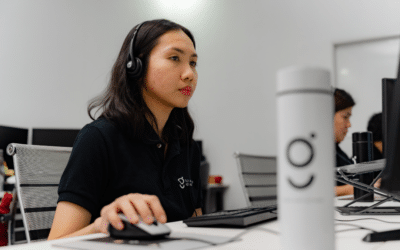
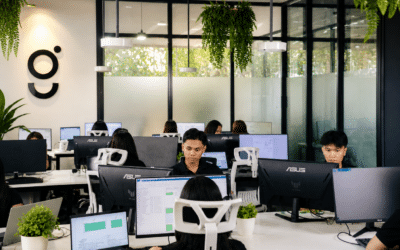
A properly run outsourcing provider operates from corporate-grade office facilities with controlled physical access, locked-down USB ports, signed confidentiality agreements, and segregated workstations. Many Australian SMEs have their in-house accountant working from a personal laptop at the kitchen table. The honest answer is that offshore can be more secure than local — but only when you choose the right provider.
What about the ATO and Australian tax law?
Outsourcing the accounting function does not change the legal responsibilities. The registered BAS agent or tax agent retains responsibility for lodgements. The business owner retains responsibility for the accuracy of the underlying records. An offshore accountant supports both — they do not replace either.
What about communication and timezone friction? Manila is two hours behind Brisbane, which means the working day overlaps almost entirely. This is genuinely different from offshoring to India or Eastern Europe, and it is the main reason the Philippines has become the default destination for Australian businesses outsourcing accounting work.
Thinking about whether your business is ready to outsource accounting?
At Global Staff Network, we build dedicated offshore accounting teams from the Philippines for Australian businesses — from bookkeepers and senior accountants through to assistant financial controllers and fractional CFO support. We handle recruitment, onboarding, IT, HR, and ongoing management.
Book a call with our experts to talk through what is possible for your business.
Want to see how outsource accounting could work in your business?
At Global Staff Network, we partner with Australian businesses to build dedicated offshore teams from the Philippines. We handle recruitment, onboarding, HR, IT, and ongoing management.




0 Comments