

Research published in 2026 by BizCover found that 31.7% of Australian small business owners have never taken a single full week off since starting their business. Among owners working 60 hours or more per week, that figure rises to 60%. (Source: BizCover, Pride, Pressure and Personal Sacrifice: The State of Australian Small Business Owners 2026, bizcover.com.au)
These numbers describe a specific structural problem — not a motivational one. Most of the business owners in that 31.7% are not unable to step away because their business is genuinely too demanding to run without them. They are unable to step away because specific operational functions do not have a dedicated owner. When anything goes wrong, or when anything needs to be done, the default is the business owner.
Outsourcing services australia addresses this pattern by giving those functions a dedicated owner. This article explains how the problem develops, what it costs, and what a structural fix looks like.
Why Australian business owners cannot step away
The functions that keep business owners tethered to their business are almost never the functions that built the business. They are the functions that accumulated around the business as it grew — payroll, bookkeeping, admin coordination, document preparation, inbox management, accounts receivable.
In year one, the owner absorbs these functions because there is no one else. In year three, year five, year eight, the same functions are still being absorbed by the owner — not because they require the owner specifically, but because they never got a dedicated owner as the business grew.
The result is a business where the owner is indispensable not because of their unique expertise, but because they are the default for everything that does not have another assigned owner. Stepping away means those functions stop, accumulate, or get handled incorrectly.
What owner burnout actually costs the business
Owner burnout is typically framed as a wellbeing problem. It is also a business performance problem. The hours an owner spends on payroll, admin, bookkeeping, and operational coordination are hours not spent on strategy, client relationships, business development, and the decisions that only the owner can make.
The business is paying for these functions at the owner’s effective hourly rate, even though they do not appear on an invoice as such. Every hour spent on bank reconciliations is an hour not available for revenue-generating activity. The cost is real — it is simply invisible in most reporting.
The BizCover research found that 50.8% of Australian small business owners have considered closing or selling their business at some point. While burnout is not the only driver of that figure, it is a significant contributor — and it is a driver that can be reduced through structural change rather than personal resilience.
Warning signs the business has no functional owner
- Payroll is processed by the owner or by a person who also does several other things
- Bank reconciliations happen when someone gets to them, not on a fixed schedule
- The owner regularly spends time on tasks they know should not require their involvement
- Admin, document preparation, and inbox management consistently spill into evenings or weekends
- There is no named person responsible for accounts receivable follow-up
- The business cannot run normally when the owner is on leave
If more than two of these apply, the business has functions without dedicated owners. The owner is absorbing them.
What outsourcing services australia actually addresses
The fix is not finding a better personal productivity system. It is giving the functions that are consuming owner time a dedicated owner — someone whose sole responsibility is to manage those functions consistently, accurately, and proactively.
For most small and mid-sized Australian businesses, the functions that make the biggest difference when they get a dedicated owner are payroll, bookkeeping, admin coordination, and document management. None of these functions are complex. They are consistent — they need to happen reliably, every week, by someone for whom they are the job rather than one of many responsibilities.
Payroll
Under Payday Super, superannuation contributions must be paid within seven business days of each pay event. For a business running weekly payroll, that is 52 reconciliation cycles per year. A dedicated offshore payroll professional handles each cycle as a scheduled, routine task rather than an interruption to other priorities.
Bookkeeping and bank reconciliation
A dedicated offshore bookkeeper or accountant maintains the accounts on a schedule the business can rely on. Reconciliations are complete before the owner checks. The management report arrives when it should. Accounts receivable is followed up systematically. The owner stops carrying bookkeeping as a background mental task.
Admin coordination and inbox management
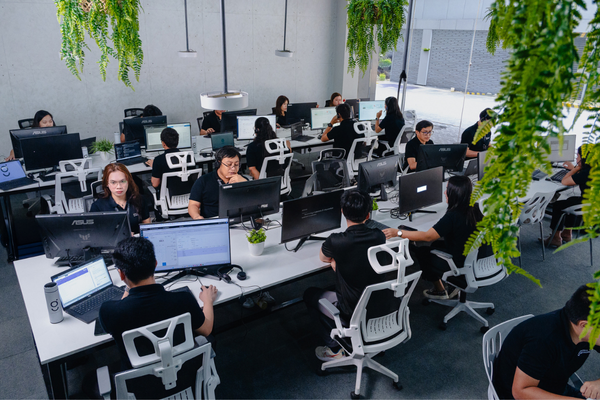
An offshore admin professional can manage the inbox, triage for owner attention, draft responses, coordinate scheduling, and handle the document preparation and data entry that currently occupies owner time between meetings. The owner gets back the uninterrupted time that is currently being consumed by administrative tasks.
What changes at month three
The businesses that move functions to a dedicated offshore owner consistently report the same shift at month three: the functions that were previously absorbing owner time are running without owner involvement. Not because standards dropped — because there is a dedicated professional whose only job is to make the function work.
At that point, the owner typically has several hours per week available for work that requires them specifically. Over a year, that is a meaningful return of capacity — redirected from administration to the decisions and relationships that drive business growth.
Businesses should obtain advice relevant to their circumstances when assessing the right staffing structure for their operations.
Global Staff Network places experienced offshore professionals into Australian businesses across payroll, accounting, admin support, and professional services functions. Learn more about offshore staffing support for Australian businesses.
Frequently Asked Questions
What is the most common cause of owner burnout in small businesses?
Research consistently points to operational overload — business owners absorbing functions that do not have a dedicated owner, including payroll, bookkeeping, admin, and inbox management. The issue is structural rather than motivational.
Can outsourcing services in Australia help a business owner take time off?
Yes, when functions that currently require the owner’s involvement are given a dedicated owner — whether offshore or onshore — the business becomes capable of running without the owner’s continuous presence. This requires proper onboarding and documented processes, not just hiring.
What functions should a business owner stop doing first?
The highest-leverage functions to delegate first are payroll, bank reconciliations, accounts receivable follow-up, and inbox management. These are time-consuming, consistent, and do not require the owner’s specific expertise or judgment.
How long does it take for an offshore professional to become productive?
Most offshore professionals reach productive, largely autonomous output in the third or fourth week when onboarding has been structured properly — with a briefing before day one and specific feedback in the first two weeks.
Is offshore staffing appropriate for businesses with fewer than 10 employees?
Yes. Many Australian businesses with 5–10 employees have placed a dedicated offshore professional for payroll, bookkeeping, or admin. The managed placement model does not require a minimum business size — it requires clear role scope and someone to provide initial briefing and feedback.





0 Comments