


Outsource Paralegal Services: What Australian Law Firms Need to Know in 2026
There is a quieter shift happening across Australian law firms that does not always make it into industry headlines. While the conversation about technology and AI tends to dominate, a more practical change is reshaping how firms actually staff their support functions. They are increasingly choosing to outsource paralegal services — and the firms doing it well are seeing the difference in their margins, their lawyers’ time, and their ability to take on more work without expanding their offices.
This is not a trend confined to large national practices. Boutique firms, regional practices, and mid-tier commercial firms are all part of this shift. The reasons are practical rather than ideological — local hiring has become harder and more expensive, client expectations on responsiveness and fee structure have tightened, and the work that paralegals actually do has not changed in a way that requires physical presence in Australia.
This blog covers what outsourced paralegal services include, why Australian firms are increasingly turning to them, and what to look for when considering the model.
What Outsourced Paralegal Services Actually Cover
The scope of work that an experienced offshore paralegal can handle is broader than most firms initially expect. The roles are not limited to administrative or filing tasks — they extend across most of the support functions that sit beneath substantive legal work.
In practical terms, the work being handled by outsourced paralegal teams across Australian firms includes:
- Document review and first-pass analysis of evidence, contracts, and discovery material
- Legal research, including case law searches, statutory interpretation, and jurisdictional comparison
- Contract drafting and management — preparing first drafts of standard agreements, tracking amendments, managing precedent libraries
- Litigation support — preparing court documents, organising chronologies, indexing material, supporting matter preparation
- Compliance work — tracking regulatory changes, maintaining compliance registers, preparing audit-ready documentation
- Client correspondence and matter file management
- Due diligence support — particularly for transactional and corporate work where document volume can be significant
The common thread is that all of this requires legal training, attention to detail, and an understanding of how Australian legal work moves — but none of it strictly requires the paralegal to be sitting in your Sydney or Melbourne office.
Why Australian Law Firms Are Looking at This Now

Three structural pressures are driving the conversation.
The first is the cost and difficulty of local hiring. Experienced paralegal candidates in Australia have become harder to find and more expensive to retain. Salaries have climbed, the candidate pool has tightened, and the cost of a failed hire — recruitment fees, lost productivity, onboarding time — adds up quickly. Firms that have spent six months trying to fill a single paralegal seat are looking at the alternatives more seriously than they did a few years ago.
The second is fee pressure. Clients have grown more cost-conscious, and the firms that cannot deliver quality work at a competitive rate are losing matters to those that can. A dedicated offshore paralegal handling first-pass research, contract review, and matter administration changes the unit economics of how a firm delivers work.
The third is structural capacity. Senior lawyers are being asked to do more with less, and the time they spend on tasks a paralegal could handle is time not spent on client relationships, strategy, or business development. The firms that are managing this well are not doing it by working their lawyers harder. They are restructuring how the work flows through the firm.
None of these pressures are easing. That is why outsourced paralegal services have moved from a fringe consideration to something most firm leaders are at least evaluating.
What a Virtual Paralegal Actually Looks Like in Practice
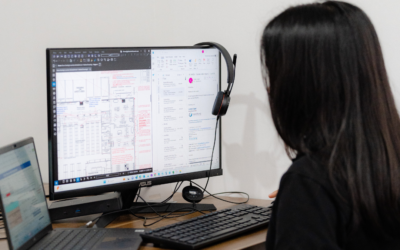
The phrase “virtual paralegal” can mean different things depending on the provider. The model that is working consistently for Australian firms is a dedicated arrangement — one paralegal working exclusively for one firm, integrated into that firm’s workflows, included in team communications, and operating under the same expectations as a local team member.
This is different from a freelance or shared-resource model. A virtual paralegal in this dedicated model is not splitting time between three different firms or working from a call centre floor. They are a committed team member who happens to be based offshore, typically in the Philippines.
The day-to-day operating rhythm looks much like working with a paralegal in another office. Briefs are issued through whatever workflow tools the firm already uses. The paralegal works during Australian business hours. Communication happens through the firm’s normal channels — email, Teams, Slack, video calls. Files are accessed through secure systems with appropriate permissions.
The arrangement works because the model has matured. The firms that pioneered it five or ten years ago worked through the integration challenges. The current generation of providers has learned what works and what does not — and the playbook for getting a paralegal embedded in a firm is now well established.
The Philippines Connection
When Australian firms look at where to base offshore paralegal teams, the Philippines consistently emerges as the destination of choice. The reasons go beyond cost.
Filipino legal professionals are educated in common law traditions — the same framework that underpins the Australian legal system. English is an official language, and the legal education system produces graduates who can support substantive legal work, not just administrative tasks. The cultural and professional alignment with Australian work practices is strong, particularly in client-facing communication.
The time zone matters too. Philippine business hours overlap meaningfully with the Australian working day, which means real-time collaboration is possible — emails get answered the same day, urgent requests can be actioned immediately, and team meetings can include the offshore paralegal as a normal participant.
The cost difference is real and significant, but firms that get the most out of the model are not choosing the Philippines purely on price. They are choosing it because they can find experienced legal professionals who integrate into Australian workflows without a long runway.
Common Concerns and What the Answers Look Like
Two concerns come up consistently when firms first consider outsourced paralegal services. Both are legitimate. Both are also manageable.
The first is data security and confidentiality. Firms are responsible for protecting client information, and any arrangement that involves files moving offshore needs to be structured with that obligation in mind. Reputable providers operate from corporate-grade office environments with biometric access, CCTV, locked USB ports, advanced firewalls, and signed NDAs covering both the provider and individual staff. The data security conversation is an important one to have early — but the answer, when working with the right provider, is that offshore arrangements can be as secure as a lawyer working from a home office, often more so.
The second is quality. The honest answer is that quality depends on the quality of the recruitment, the clarity of the brief, and the investment in onboarding. A well-recruited offshore paralegal who is properly onboarded and given clear expectations will deliver consistent work. One who is brought on with vague scope and minimal guidance will not — just as would be the case with any local hire. The firms that find outsourced paralegal services frustrating are usually the ones who treated it as a plug-and-play solution. The ones that find it transformative are the ones who treated their offshore paralegal as part of the team from day one.
How to Get It Right
The firms that are seeing strong outcomes from outsourced paralegal services tend to do a few things consistently.
They define the role properly before they hire. A vague brief produces vague results. Starting with a specific function — contract review, litigation support, matter file management — and letting a dedicated paralegal own it properly produces much stronger outcomes than asking someone to “help with whatever comes up.”
They choose providers who understand Australian legal work. Not every offshore provider has experience placing professionals into law firms. Legal terminology is specific, the Australian regulatory environment is particular, and expectations around confidentiality and accuracy are higher than for a generic back-office role. A provider who has placed legal professionals into Australian firms before will recruit differently than one treating it as another admin placement.
They invest in integration. An offshore paralegal who is included in team communications, understands the firm’s processes, and has the right systems access will deliver significantly more than one who receives tasks through a ticket queue with no context. The two to four weeks of investment in proper onboarding pays back quickly.
They treat the offshore paralegal as part of the team. This is the single biggest predictor of whether the arrangement works. The firms that get this right include their offshore staff in team meetings, give them feedback the way they would any other team member, and treat them as colleagues rather than vendors.
A Real-World Picture
A Partner at a mid-sized commercial firm in Brisbane brings on a dedicated offshore paralegal through a Philippines-based outsourcing arrangement. The paralegal handles first drafts of standard agreements, conducts precedent research, manages the Partner’s matter files, and prepares client correspondence for review.
Within eight weeks, the Partner has reclaimed roughly two hours of billable time per day. Within four months, the arrangement is embedded into how the practice operates — and the firm is in a position to take on additional matters without adding local headcount.
This is not an exceptional outcome. For firms that approach outsourced paralegal services with clear role definition and genuine integration, it is a reasonable expectation.
The conversation in Australian legal circles has moved on from whether this works. It is now firmly about how to do it well.
Thinking about adding paralegal capacity to your firm?
At Global Staff Network, we work with Australian law firms to build dedicated offshore legal teams from the Philippines — from paralegals and legal secretaries through to compliance professionals and legal researchers. We handle recruitment, onboarding, HR, IT, and ongoing management.





0 Comments