


A BIM modeller or drafter in Australia costs upward of $95,000 a year fully loaded. The equivalent offshore AutoCAD operator, structured properly, runs 18,000–25,000 — a saving of roughly 75%. That gap is real and well documented, but it’s also the least useful thing to lead with, because the number that actually determines whether AutoCAD outsourcing works for a specific firm is utilisation, not the rate card.
The utilisation threshold that decides whether outsourcing makes sense
Outsourcing CAD drafting work becomes clearly advantageous once in-house drafter utilisation falls below roughly 70% — the point at which a firm is effectively paying full-time wages for part-time output. For firms with variable drafting workload, a hybrid model — a smaller in-house core team supplemented with outsourced overflow — typically delivers a 30–50% cost reduction against running a fully in-house team sized for peak demand.
For firms with steady, high-volume drafting work rather than variable workload, the savings are smaller but still meaningful — generally 20–40% in labour cost, since the offshore rate advantage holds even without the utilisation problem the hybrid model specifically solves.
What the working relationship actually looks like
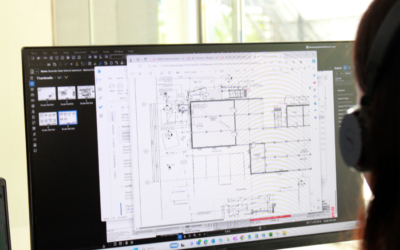
A well-structured offshore AutoCAD arrangement runs on the firm’s own drawing standards, layer conventions, and title block templates from day one — not a generic template the offshore operator applies and the local team then has to rework. Files are typically exchanged through the same project management and file-sharing systems the firm already uses, with drawings coming back for review through the same QA process as any in-house output.
The offshore operator’s output should be indistinguishable in format and quality standard from an in-house drafter’s — the difference is location and cost structure, not process.
Where this fits inside a firm’s broader drafting need
AutoCAD-specific outsourcing is a narrower, software-specific service than broader drafting outsourcing, which can also include manual detailing, shop drawing preparation, and documentation work that isn’t necessarily CAD-based. Firms with a clearly defined, software-specific need — a backlog of AutoCAD drawings that needs clearing, or an ongoing volume of CAD work that doesn’t justify another full-time local hire — are the clearest fit for this specific service.
The broader pressure making this a live conversation now
Australia’s construction sector is facing a projected shortfall of 300,000 workers by 2027, up from around 141,000 currently, against a $242 billion infrastructure pipeline that isn’t slowing down to wait for the labour market to catch up. Drafting and CAD roles are squarely inside that shortage — which is why offshore AutoCAD support has moved from a cost-optimisation tactic to, for many firms, a genuine capacity necessity.
GSN places dedicated offshore AutoCAD and CAD professionals for Australian construction and engineering firms, working on your own drawing standards from day one. See how we approach construction outsourcing.
FAQS
How much can a firm save by outsourcing AutoCAD/CAD drafting?
A BIM modeller or drafter costs $95,000+ a year in Australia versus 18,000–25,000 offshore — roughly 75% savings. For steady, high-volume work without a utilisation problem, the reduction is typically 20–40%.
At what point does outsourcing CAD drafting make financial sense?
Once in-house drafter utilisation falls below roughly 70%. Below that threshold, a firm is effectively paying full-time wages for part-time output.
Is AutoCAD outsourcing the same as broader drafting outsourcing?
No — AutoCAD outsourcing is software-specific CAD work. Broader drafting outsourcing can include manual detailing and documentation that isn’t necessarily CAD-based.




0 Comments