


The Real Cost of Outsourced Bookkeeping (And Why Australian SMEs Are Switching)
Most Australian SMEs have looked at outsourced bookkeeping at least once. A junior bookkeeper in Sydney now costs $70,000 plus super, a senior one closer to $95,000. Add software, training, and the productivity loss when they take leave or move on, and the true cost of an in-house bookkeeper sits well above $100,000 a year.
The question owners are asking is not whether outsourcing is cheaper. It clearly is. The question is whether the work actually gets done properly, whether the numbers can be trusted, and whether handing over the books to someone offshore is going to cause more problems than it solves.
This blog gives a straight answer to all three.
What Outsourced Bookkeeping Actually Covers
Outsourced bookkeeping is the practice of having a dedicated bookkeeper handle the day-to-day financial records of a business from a remote location, usually offshore. The work is the same work an in-house bookkeeper would do. The difference is where the bookkeeper sits.
A typical engagement covers:
- Accounts payable and accounts receivable processing
- Bank reconciliations and credit card reconciliations
- BAS preparation and lodgement support (working with your accountant or BAS agent)
- Payroll processing through Xero, MYOB, or QuickBooks
- Month-end close, journal entries, and management reporting
- Debtor follow-up and supplier liaison
What it does not cover is sign-off on lodgements. The registered BAS agent or tax agent of record remains responsible for that, and the regulatory framework around tax practitioner registration has not changed. A bookkeeper supports the agent. They do not replace one.
The Real Cost — Side by Side
The headline number that gets quoted most often is that offshore bookkeeping costs around 60 to 70 per cent less than a local hire. That is broadly accurate, but it does not tell the full story.
Here is what an honest comparison looks like for a mid-tier Australian SME hiring one full-time bookkeeper:
In-house bookkeeper in Sydney
- Salary: $75,000
- Superannuation: $8,625
- Software, training, equipment: $4,000
- Recruitment cost (amortised): $3,000
- Leave coverage and turnover risk: difficult to quantify, but real
- **All-in annual cost: roughly $90,000**
Dedicated offshore bookkeeper through GSN
- All-in monthly fee: from $3,000
- All-in annual cost: roughly $36,000
The dollar difference is real. But it is not the only reason businesses are switching. The other reason is capacity. An in-house bookkeeper in a small business is often stretched across reception, admin, and HR. An offshore bookkeeper is dedicated to bookkeeping, full stop. They have the bandwidth to actually keep the books current, which is something a lot of Australian SMEs have quietly accepted is not happening today.
Why the Philippines Is the Default Choice
When Australian businesses look at outsourcing bookkeeping services, the Philippines is the destination most arrangements end up in. There are three reasons for that, and price is only one of them.
First, the accounting talent pool is large and qualified. The Philippines produces tens of thousands of accounting graduates each year. A significant portion of them are trained on the same accounting software Australian businesses already use — Xero is widely taught, MYOB and QuickBooks support is common, and many have exposure to industry-specific platforms like Simpro or Buildxact.
Second, the time zone aligns. Manila is two to three hours behind Sydney, which means an offshore bookkeeper is working through your business day. Questions get answered the same morning. Reports land before the meeting, not after it. This is genuinely different from offshoring to India or Eastern Europe, where the time gap forces email-only collaboration.
Third, English fluency is standard. The Philippines is one of the largest English-speaking workforces in the world, and accounting graduates are typically educated in English from the start. Communication is rarely the friction point.
The Concerns Worth Taking Seriously
There are three concerns owners raise consistently when they first consider offshore bookkeeping. None of them are unreasonable.
Data security
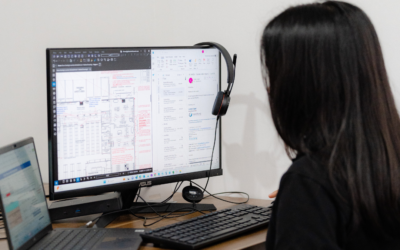
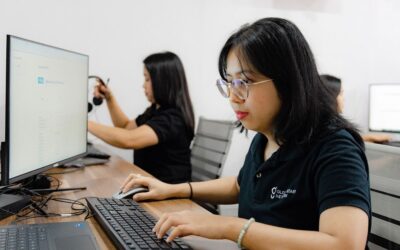
Your bookkeeper has access to bank feeds, payroll, and supplier records. Any decent provider should operate from a corporate-grade office with controlled access, locked-down USB ports, restricted browsing, and signed confidentiality agreements. Working from a kitchen table on a personal laptop is not the standard, and it should not be acceptable. The honest answer is that an offshore bookkeeper in a properly run facility is often more secure than a local hire working remotely from home.
Quality and accountability
This is the concern that decides whether outsourcing works or fails. A bookkeeper who is well-recruited, properly inducted, and given a clear scope will deliver. One who is brought on with a vague brief and no onboarding will not — and that is true in Australia too. The firms that get the most out of offshore bookkeeping treat their offshore staff as part of the team from day one, not as a service provider hidden behind a portal.
ATO and compliance obligations
Outsourcing the bookkeeping does not change the legal obligations. The business owner is still responsible for accurate records, the BAS agent is still responsible for lodgement, and Australian privacy law still applies to how customer and employee data is handled. None of this is a barrier. It is a question of working with a provider that understands the regulatory context and structures the arrangement accordingly.
What This Looks Like in Practice
A construction business in Brisbane, three directors, around 40 staff. Bookkeeping was being handled by the office manager alongside everything else. Bank rec was always two months behind. The accountant was reconstructing the records at year-end and charging accordingly.
They brought on a dedicated offshore bookkeeper through GSN. Within six weeks the bank rec was current. Within three months the management reports were landing on the first Monday of the month. The accountant’s year-end fee dropped by about 40 per cent because the records were actually in order. The office manager got her job back.
That is not an unusual outcome. For SMEs where bookkeeping has quietly become “whoever has time,” moving it to a dedicated offshore bookkeeper is one of the higher-leverage changes available.
How to Tell If It Is Right for Your Business
Outsourced bookkeeping is not a fit for every business. It works best when there is enough volume to keep a dedicated bookkeeper genuinely busy — generally somewhere north of $1 million in turnover, or a higher-transaction business below that. It works less well for micro-businesses where a few hours a week from a local bookkeeper is enough.
The honest test is this: if you cannot remember the last time your bank rec was current, or if your accountant’s year-end bill keeps creeping up because the records are not in order, the case for outsourcing is already strong. If your books are immaculate and your in-house bookkeeper has plenty of capacity, the case is weaker.
Thinking about what this could look like for your business?
At Global Staff Network, we build dedicated offshore bookkeeping teams from the Philippines for Australian SMEs. We handle recruitment, onboarding, IT, HR, and ongoing management. You get a full-time bookkeeper who works your hours, uses your software, and integrates with your accountant.
Book a call with Brett to talk through what is possible for your business.
Want to see how outsourced bookkeeping could work in your business?
At Global Staff Network, we partner with Australian businesses to build dedicated offshore teams from the Philippines. We handle recruitment, onboarding, HR, IT, and ongoing management.




0 Comments